Warm vs Cold Aluminum Windows: A Complete Guide for Modern Canadian Homes
Aluminum windows are becoming increasingly popular in contemporary residential and commercial design. They are known for their strength, slim sightlines, and premium aesthetics. Yet, many homeowners still believe that aluminum windows are always “cold” and unsuitable for heated living spaces. In reality, modern aluminum systems come in two fundamentally different types — cold and warm — each designed for specific applications.
In this article, we explain the difference between these two systems, how thermal breaks work, and why warm aluminum windows have become a top choice for energy-efficient homes across Canada.
1. What Are Cold Aluminum Window Systems?
Cold aluminum systems are made from solid aluminum profiles without any thermal break inside. Because aluminum is a highly conductive material, these profiles do not provide proper insulation for heated interiors.
Cold aluminum windows:
– do not retain warmth inside the room;
– allow outside temperatures to pass through the frame;
– may create condensation in colder climates.
However, this doesn’t mean cold systems are outdated. They simply serve a different purpose and work perfectly in non-insulated areas.
Cold aluminum systems are ideal for:
– balconies and seasonal terraces;
– non-heated sunrooms;
– interior office partitions;
– storefronts and mall entrances;
– sliding systems for summer use;
– non-insulated lobbies and commercial spaces.
They are durable, lightweight, corrosion-resistant, and maintain their appearance for decades. Aluminum does not warp, swell, or deteriorate, which makes cold systems an excellent choice for non-heated environments.
2. What Are Warm Aluminum Windows and Why Are They Suitable for Homes?
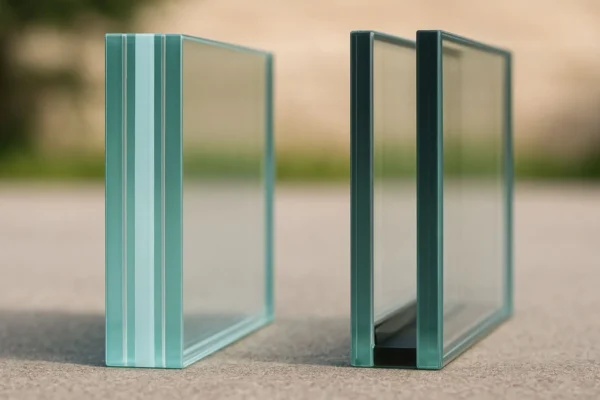
Warm aluminum windows solve the biggest drawback of aluminum — thermal conductivity. This is achieved by adding a thermal break, also known as a thermal barrier, between the inner and outer sections of the aluminum frame.
The thermal break is usually made of:
– polyamide,
– fiberglass-reinforced composites,
– or other advanced insulating materials.
This insert interrupts the transfer of cold and prevents the exterior temperature from affecting the interior part of the frame.
How the thermal break works:
1. The outside of the frame is exposed to cold weather.
2. The thermal break stops the cold from transferring inward.
3. The interior side of the frame remains warm.
As a result, warm aluminum windows achieve excellent insulation values and can meet strict Canadian energy-efficiency standards.
Key benefits of warm aluminum systems:
– excellent insulation;
– high structural strength;
– ability to create oversized windows and doors;
– modern minimalistic design with slim profiles;
– unlimited colour options;
– fire-resistant and long-lasting construction.
3. Why Many People Still Think Aluminum Windows Are “Cold”
The misconception comes from older aluminum systems used 20–30 years ago, which did not include thermal breaks. These early designs were common in older buildings and gave aluminum a reputation as a “cold” material.
Today’s warm aluminum profiles are completely different — engineered with multi-chamber insulation and advanced thermal barriers.
Why the myth still exists:
– older cold systems still exist in many buildings;
– lack of knowledge about modern warm systems;
– comparisons with PVC without proper context;
– incorrect installation of cold systems in heated rooms.
In reality, warm aluminum windows belong to the premium segment and often outperform PVC in durability and architectural capabilities.
4. Warm vs Cold Aluminum Windows: Detailed Comparison
Feature | Cold Aluminum | Warm Aluminum
Insulation | Low | High
Thermal Break | No | Yes
Use Case | Non-heated spaces | Homes & commercial heated spaces
Price | Lower | Higher
Maximum Size | Very large | Very large
Durability | 30+ years | 40–50 years
Architectural Flexibility | High | Very high
Frame Thickness | Slim | Slim & insulated
5. Where Warm Aluminum Windows Are Used
Warm aluminum windows are ideal for premium residential and commercial construction. They are widely used in:
– modern custom homes;
– townhouses and luxury residences;
– commercial storefronts;
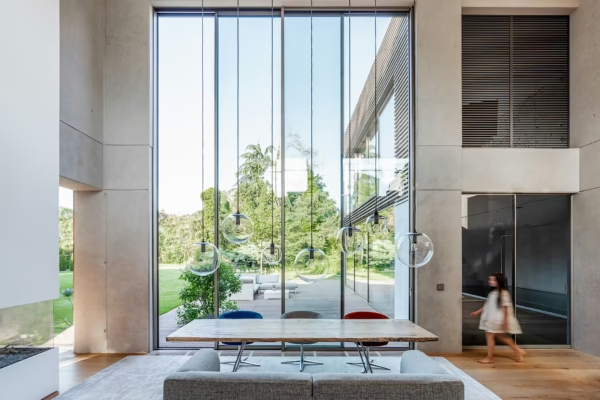
– condos with floor-to-ceiling glazing;
– lift-and-slide systems;
– oversized portals and panoramic openings.
Their strength and design flexibility make them the standard for contemporary architecture.
6. Aluminum vs PVC vs Wood: Which Is Better?
PVC Windows:
Pros: affordable, good insulation.
Cons: limited size options, potential yellowing and deformation.
Wooden Windows:
Pros: natural look, premium aesthetics.
Cons: require maintenance, high cost, limited sizes.
Aluminum Windows:
Pros:
– exceptional strength,
– slim design,
– ideal for large openings,
– long lifespan (40–50 years),
– excellent insulation with thermal breaks.
7. Warm Aluminum Systems Used by Prime Portal Inc.
Prime Portal Inc. offers premium European aluminum window systems engineered for the Canadian climate. All products are custom-made, fully insulated, and professionally installed.
8. Conclusion
Aluminum windows come in two types — warm and cold — and each serves its own purpose. Modern warm aluminum systems have transformed aluminum from a “cold material” into one of the most advanced, durable, and energy-efficient solutions available.
With an integrated thermal break, warm aluminum windows provide excellent insulation while maintaining the slim, elegant lines that define modern architecture.
For homeowners and builders seeking premium aesthetics, structural strength, and long-term performance, warm aluminum windows are the ideal choice.
Let’s work together to create something that’s not just made — but made for you.
Contact us today for expert advice, custom configurations, or a free quote.