Passive House Certified Windows: Requirements and Benefits
Passive House construction is one of the world’s most advanced and energy-efficient building standards. Windows—typically the weakest point in a building envelope—must meet strict performance criteria to achieve certification. Passive House Certified Windows offer exceptional insulation, airtightness, and comfort, making them ideal for Canada’s harsh climate.
1. What Are Passive House Certified Windows?
These windows are engineered and laboratory-tested to meet Passive House Institute (PHI) standards. They feature extremely low U-values, triple or quadruple glazing, thermally broken frames, airtight designs, and optimized solar gain.
2. Why They Matter
Windows account for up to 40–60% of heat loss. Passive House windows eliminate drafts, cold spots, condensation, and overheating while drastically reducing energy demand.
3. Certification Requirements
– Uw ≤ 0.80 W/m²·K
– Ug ≤ 0.70 W/m²·K
– Uf ≤ 0.80–1.0 W/m²·K
– Extremely low air leakage
– Warm edge spacers
– Thermal-bridge-free installation
4. Key Differences from Standard Windows
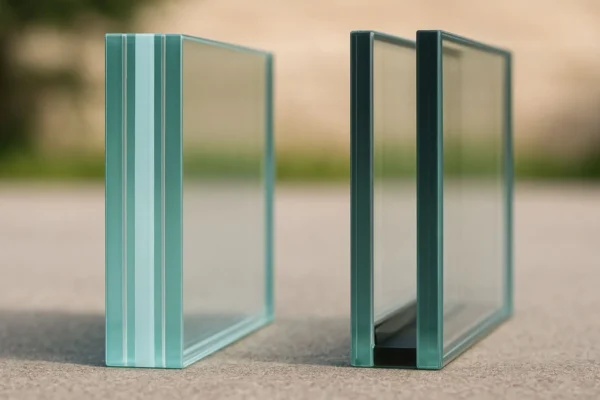
– Triple or quadruple glazing
– Multiple Low-E coatings
– Argon/krypton gas
– Insulated aluminum, PVC, or hybrid frames
– Multi-point locking hardware
– Warm edge spacers
5. Benefits
A. Energy Efficiency
Passive House windows reduce heating/cooling by 80–90%.
B. Superior Comfort
Warm glass surfaces eliminate cold drafts and temperature swings.
C. Condensation Prevention
Warm edge spacers improve edge temperatures and reduce moisture buildup.
D. Soundproofing
Triple glazing + laminated options significantly reduce outdoor noise.
E. Durability
Longer IGU lifespan, strong frames, and high-quality hardware.
F. Security
Multi-point locking systems like Winkhaus, Roto, and Siegenia offer superior protection.
G. Higher Resale Value
Homes with Passive House windows have greater market appeal.
6. Passive House in Canadian Climate
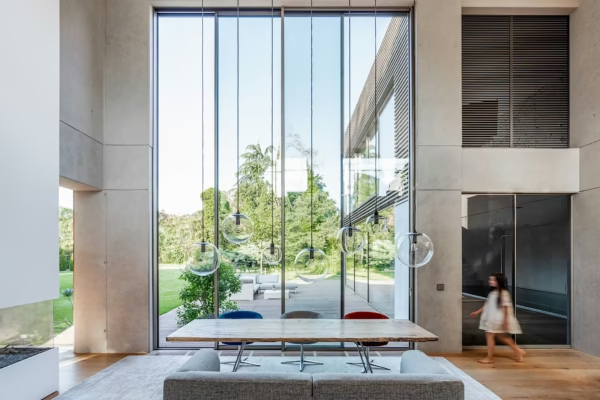
These windows excel in cold regions by preventing frost, maintaining stable indoor temperatures, and improving comfort in modern open-concept homes.
7. Best Window Types
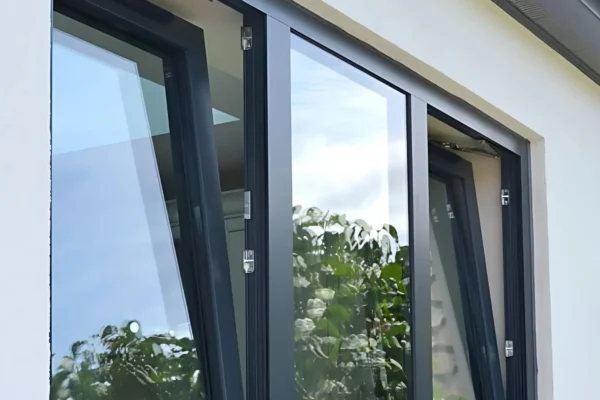
– Tilt-and-turn
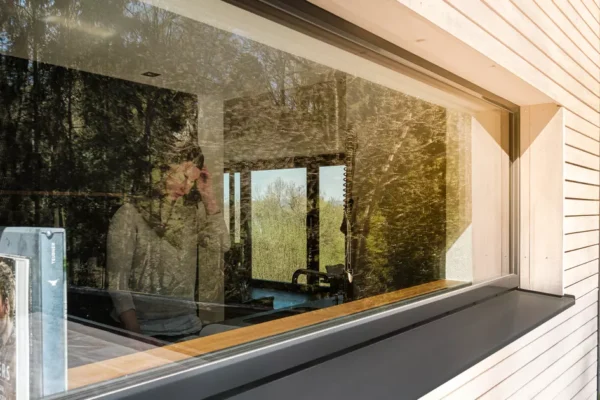
– Fixed picture windows
– Passive House-rated lift-and-slide doors
– Curtain wall systems for commercial Passive House buildings
8. How to Verify Certification
Look for the official PHI Certified Component label. Claims of “Passive House quality” are not the same as PHI certification.
9. Final Recommendations
For new builds in Canada:
– Triple glazing
– Thermally broken aluminum or hybrid frames
– Warm edge spacers
– Multi-point locking
– Soft-coat Low-E
– Argon/krypton
– Airtight installation
Passive House windows ensure world-class performance and long-term comfort, making them one of the smartest investments for Canadian builds.
Let’s work together to create something that’s not just made — but made for you.
Contact us today for expert advice, custom configurations, or a free quote.